
Travel Version
Compact Exhibition Concept
Overview
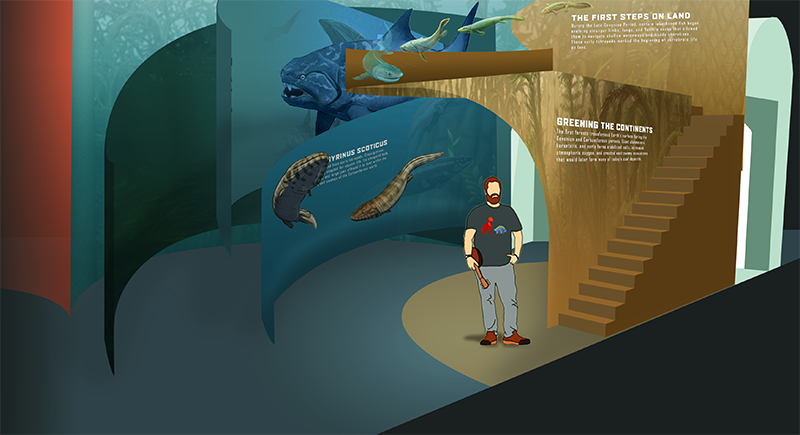
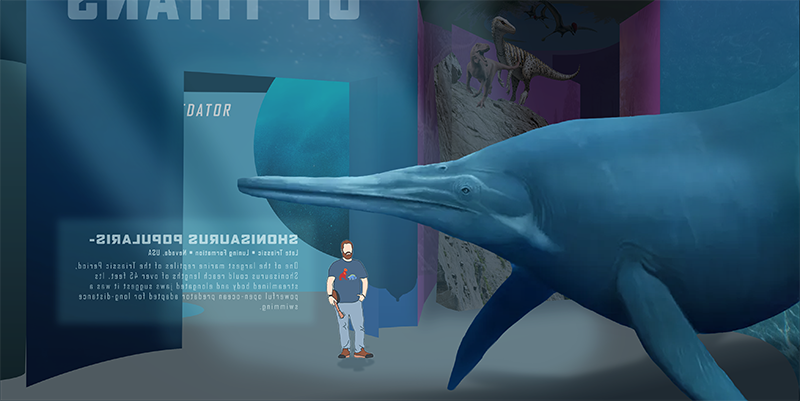
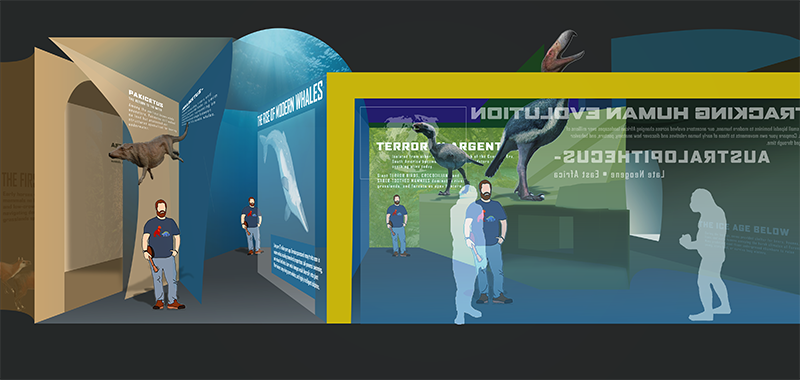
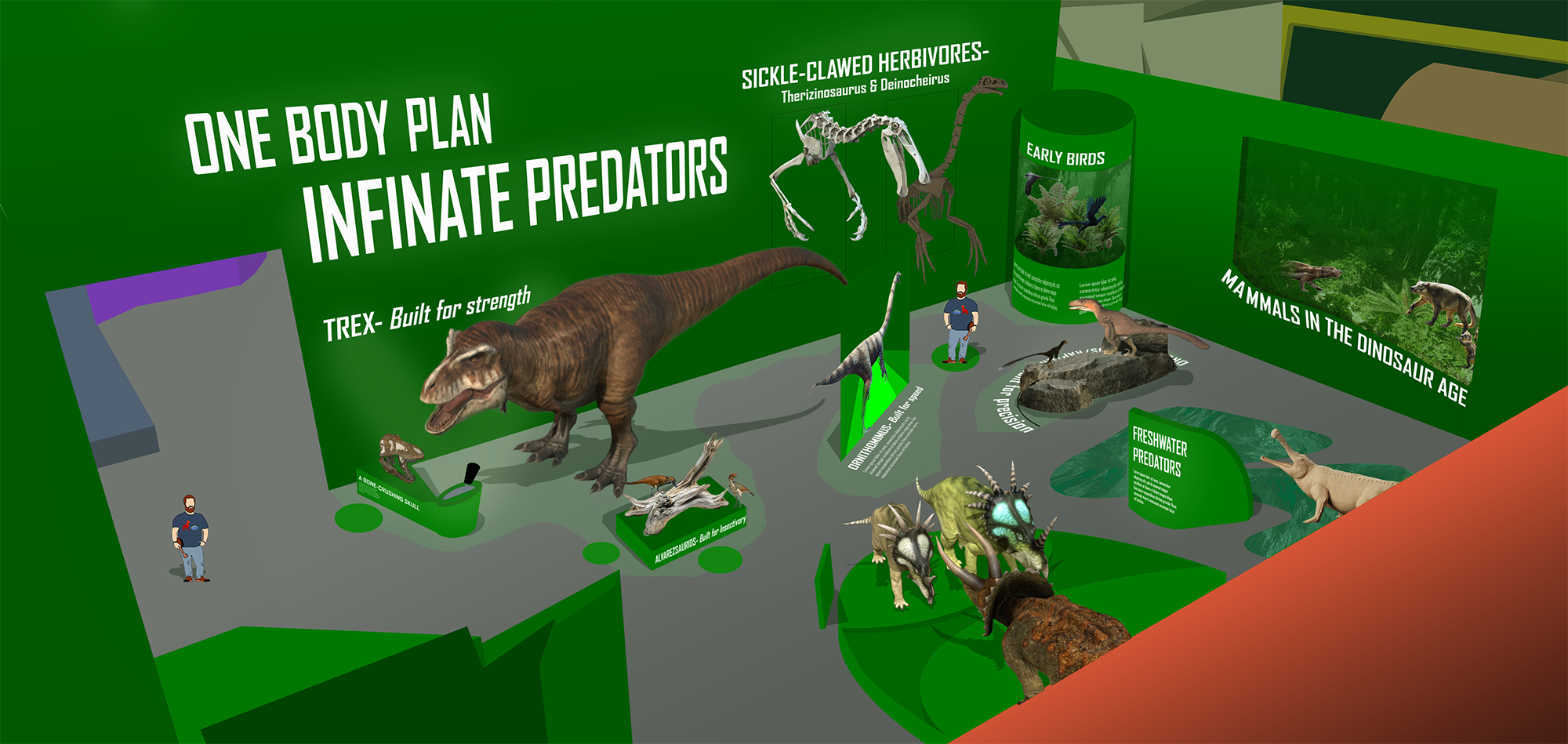
A compact travel version of Prehistoric Pathways, shifting the full-building concept into a smaller exhibit focused on installed pieces, curved screens, projections, and interactive model displays.
The Goal
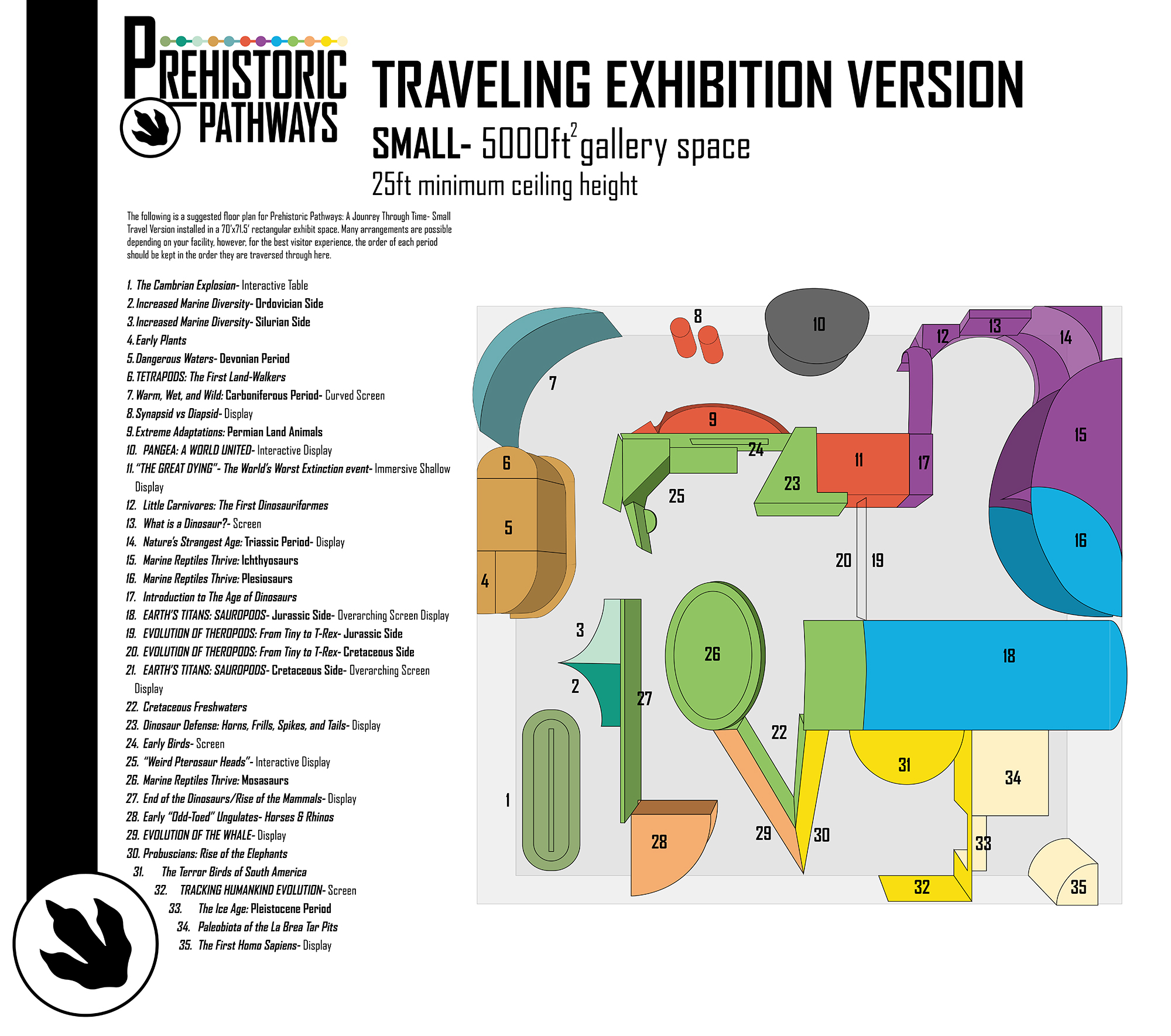
The goal was to design a unified traveling experience for both 5,000–12,000 sq ft spaces that would offer visitors the same sense of immersion in a smaller footprint.
Key challenges included spatial planning, circulation, and the electrical and technical requirements needed to support interactive exhibit components on the road.
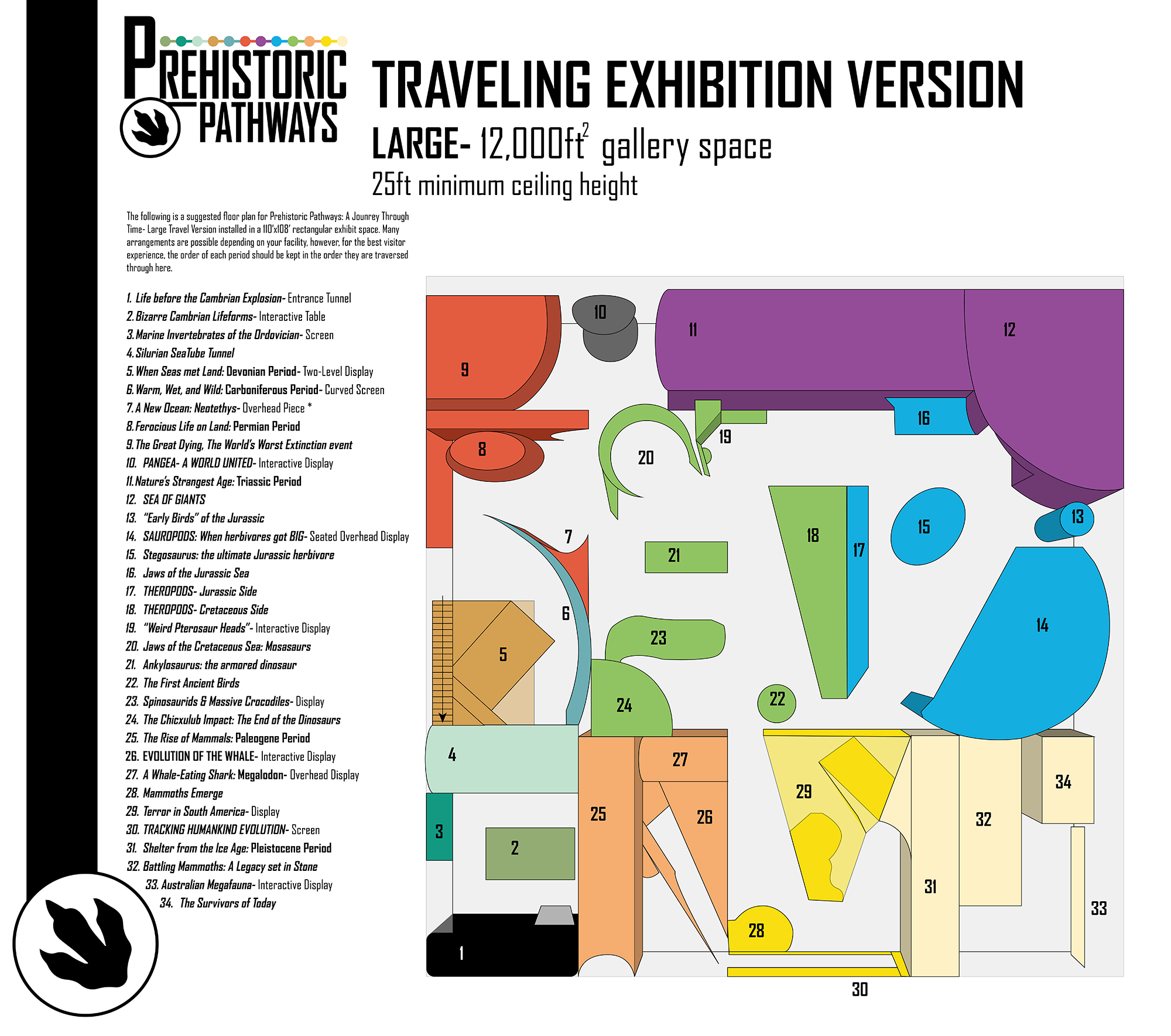
Travel Layout Comparison
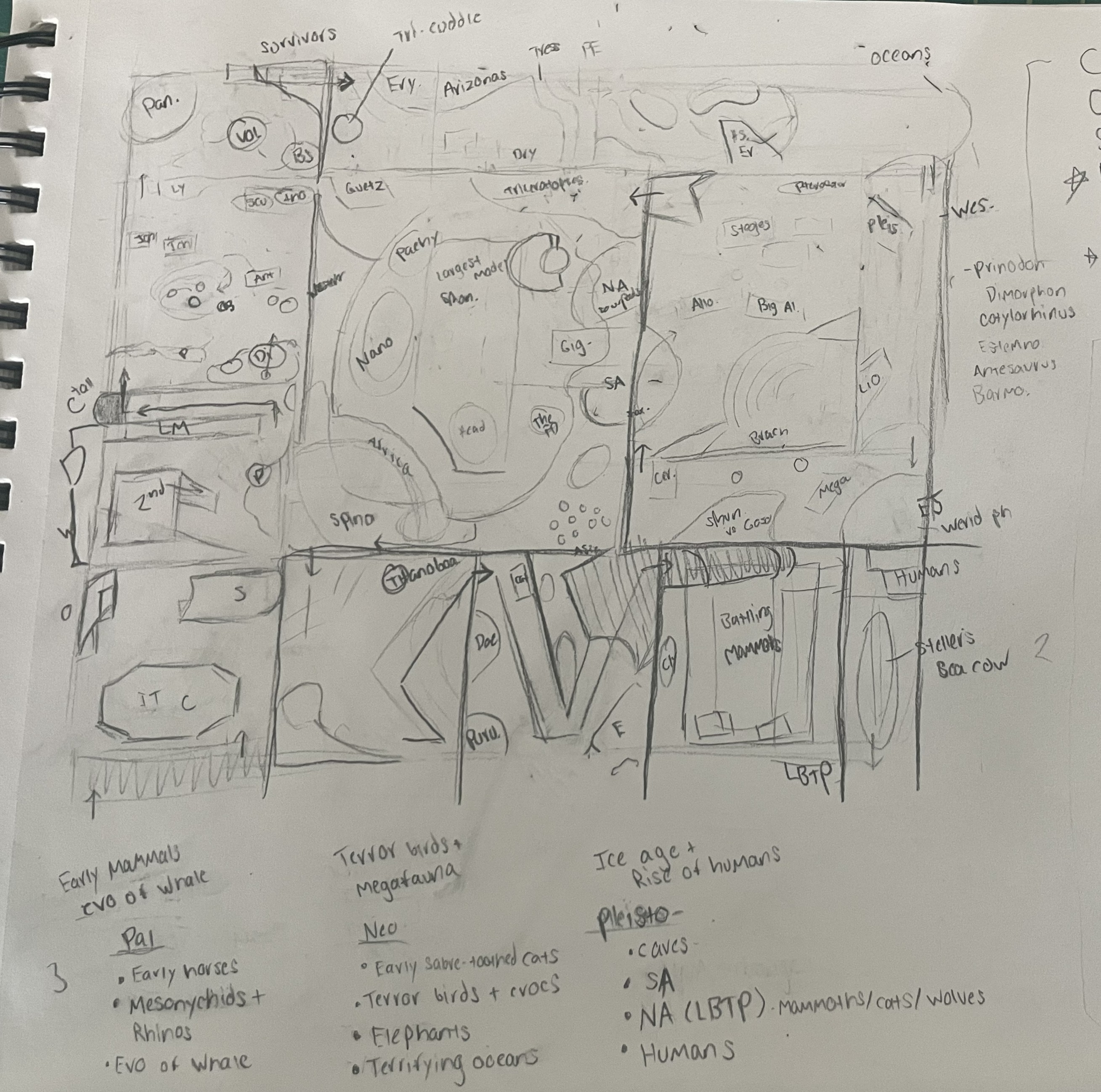
Both versions keep the same core story arc and major interactive moments, but the smaller footprint condenses circulation and combines certain zones to preserve impact within a tighter spatial envelope.
Travel-Specific Interactive Piece
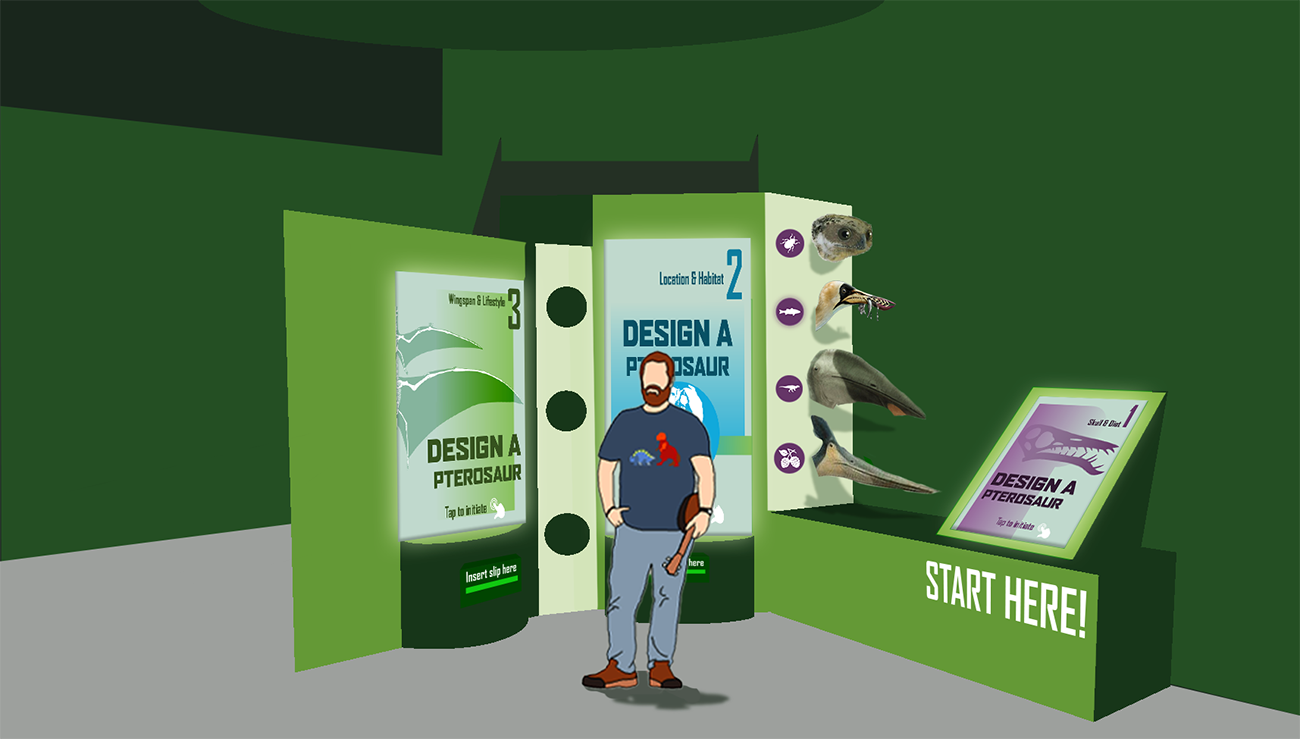
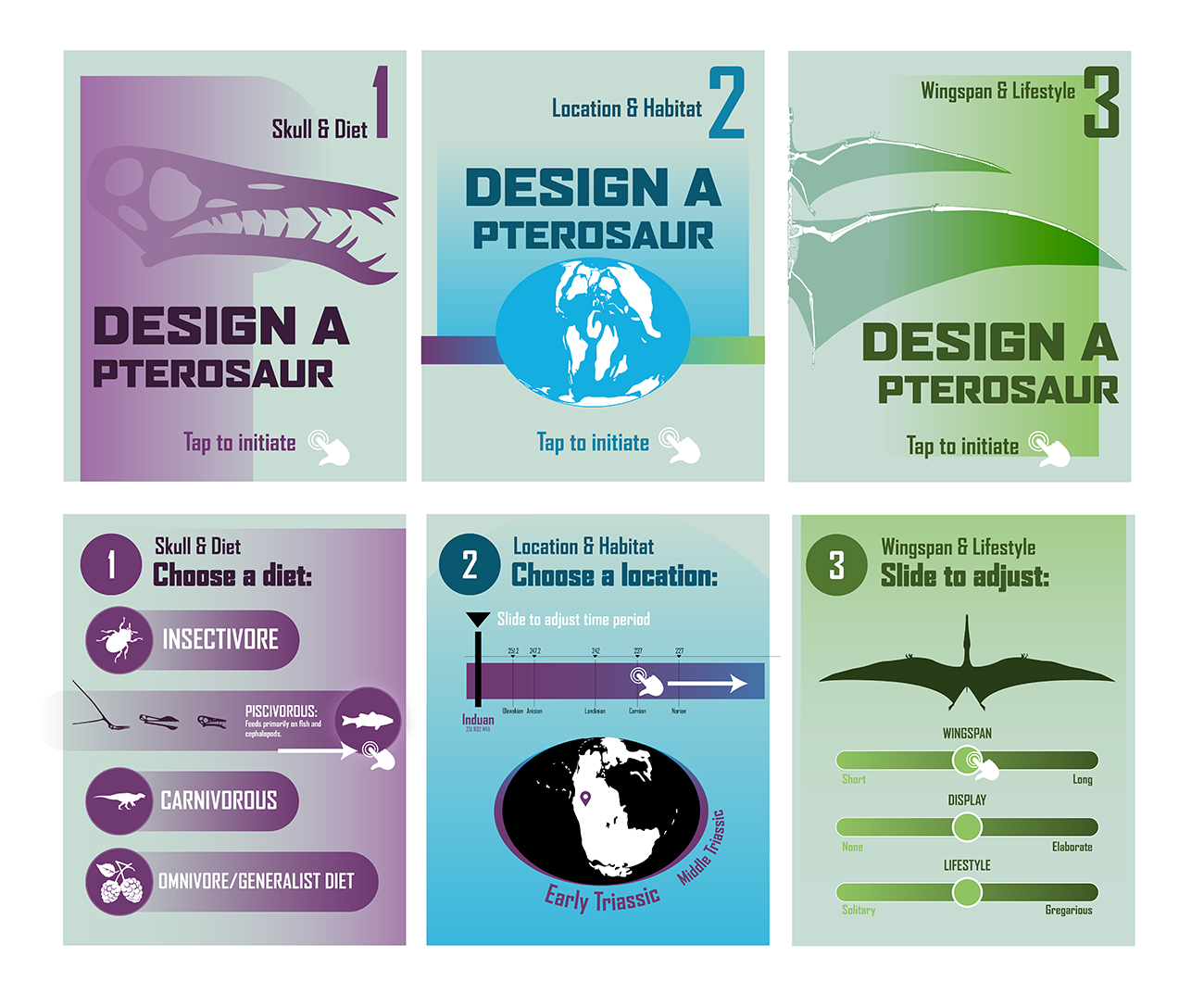
This interactive setup features 3D, realistic pterosaur head models for visitors to touch, move, and compare while learning how environment, diet, and behavior shaped their unusual appearances. Touchscreen panels provide a “Create Your Own Pterosaur” activity that connects form to lifestyle and habitat.
.png)
Viewing Area
In a traveling exhibit—especially one designed for spaces as small as 5,000 sq ft—placing life-sized sauropods directly in the room would consume too much usable floor area. Instead, I designed a curved-screen viewing zone that preserves the feeling of encountering animals of that scale from a visitor’s perspective.
From long-necked mamenchisaurids to towering “thunder lizards,” guests watch these animals move through their environment overhead, creating a strong sense of size while keeping the physical layout compact and flexible.